Running a northern or remote small business means wearing every hat — including marketer. When time and budget are tight, producing fresh content every week feels impossible. But what if one conversation could fuel an entire month of marketing?
A content repurposing strategy for rural small businesses solves exactly this problem. Instead of starting from scratch each time, you build a “source asset” — typically an expert interview — and systematically transform it into guides, social posts, FAQs, email newsletters, and more. This guide walks you through a repeatable workflow that works even with a team of one.
Why Northern Businesses Need a Source-First Content System
Most content advice assumes you have a dedicated marketing team, a studio, and hours to spare. Northern and remote businesses rarely have any of those. What you do have is deep local expertise, trusted community relationships, and authentic stories that urban competitors can’t replicate.
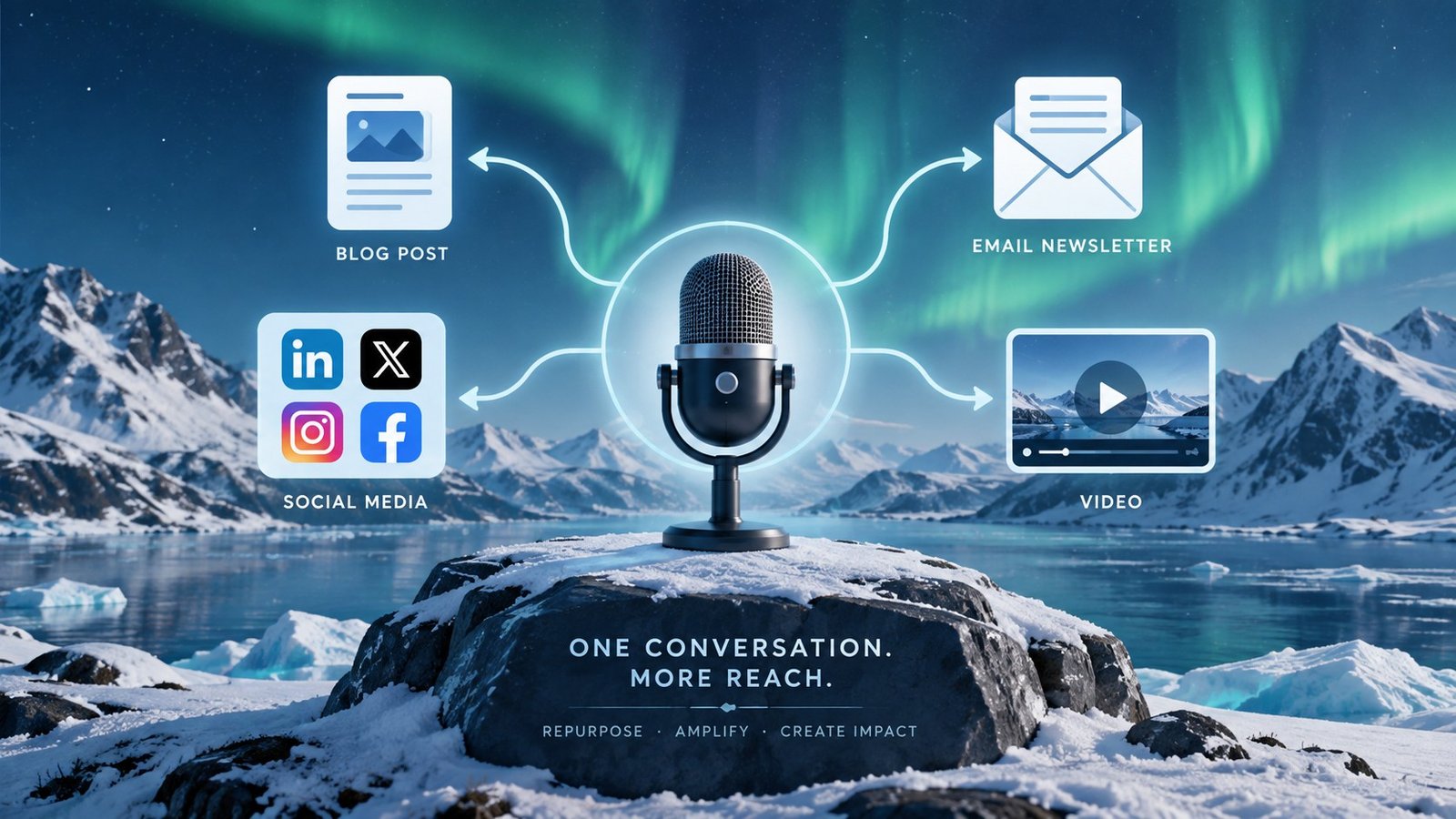
A source-first system flips the content creation model: instead of brainstorming new topics constantly, you extract maximum value from a single, well-chosen conversation. One 45-minute interview with a local supplier, a long-time customer, or a community expert can generate:
- A long-form blog post or guide
- A 5-part email series
- 8–12 social media posts
- A FAQ page update
- A community forum discussion thread
- A short video or audio clip
The key is planning the repurposing before you record the interview, so you capture the right material the first time.
How to Choose an Interview Topic With Long-Term Value
Not every conversation makes a good source asset. The best interview topics share three qualities:
- They answer a question your customers ask repeatedly. Check your inbox, your social comments, and your reviews. What do people want to know before they buy?
- They have a long shelf life. Avoid topics tied to a specific promotion or season. Instead, focus on evergreen subjects: how your product is made, how to get the most from your service, or what makes your region unique.
- They feature a credible voice. The interviewee doesn’t need to be famous — they need to be trusted. A local reindeer herder explaining seasonal logistics is more compelling to your audience than a generic industry expert.
Once you’ve chosen your topic, write 10–15 questions in advance. Aim for open-ended questions that invite stories and specific details, not yes/no answers. Those details become the quotes, examples, and data points that make every repurposed asset feel real.
7 Ways to Repurpose One Interview Into a Month of Content
Here’s the core of the workflow — seven distinct content formats you can produce from a single recorded conversation:
1. Long-Form Blog Post or Guide
Transcribe the interview and edit it into a structured article with H2 headings, bullet points, and a clear takeaway. This becomes your anchor content — the piece everything else links back to. Aim for 800–1,200 words and optimize it for your primary keyword.
2. Email Newsletter Series
Break the interview into 4–5 thematic sections and send one per week. Each email should stand alone but reference the full article for readers who want more. This approach works especially well for email automation for remote businesses, where a drip sequence keeps your audience engaged between purchases.
3. Social Media Post Series
Pull 8–12 direct quotes or key insights from the interview. Pair each with a simple graphic or a photo from your location. Schedule them across two to three weeks, spacing them so your feed stays active without feeling repetitive.
4. FAQ Page Update
Identify every question the interviewee answered and add those Q&A pairs to your website’s FAQ section. This is one of the fastest ways to improve your site’s relevance for long-tail search queries — the kind of specific questions northern customers type when they’re close to making a decision.
5. Community Forum or Group Discussion
Post a summary of the interview’s most interesting insight in a relevant online community — a local Facebook group, a regional business forum, or a niche subreddit. Frame it as a conversation starter, not a promotion. Ask members what they think or whether they’ve had similar experiences.
6. Short Audio or Video Clip
If you recorded the interview on video or audio, clip the single most compelling 60–90 second exchange. This works well for Instagram Reels, YouTube Shorts, or a podcast teaser. You don’t need professional editing — a clean clip with good audio is enough.
7. Service or Product Page Update
Use the interview to refresh the copy on a relevant service or product page. If your interviewee explained a benefit or use case you hadn’t articulated before, add it. Fresh, specific language improves both conversion rates and search visibility.
Match Each Repurposed Asset to the Right Channel
Not every format belongs on every platform. Use this simple matching guide:
| Format | Best Channel |
|---|---|
| Long-form article | Website blog, email newsletter |
| Quote graphics | Instagram, Facebook, LinkedIn |
| FAQ updates | Website, Google Business Profile Q&A |
| Audio/video clips | YouTube Shorts, Instagram Reels, podcast feed |
| Community discussion | Facebook Groups, Reddit, local forums |
| Email series | Your subscriber list |
The goal isn’t to be everywhere — it’s to be consistent on the channels where your customers actually spend time. For most northern small businesses, that means a combination of email, Facebook, and your own website. For content strategy insights tailored to remote markets, see our guide on building a low-bandwidth webinar program for remote audiences — many of the same principles apply to content distribution.
Run a Quarterly Audit to Update and Reuse Strong Material
Content repurposing isn’t a one-time event. Every three months, review your source assets and ask:
- Which pieces drove the most traffic, shares, or replies?
- Has anything changed that makes the content outdated?
- Can you update the article with new information and republish it?
- Are there new channels where this content would perform well?
Strong evergreen content can be refreshed and redistributed multiple times. A guide you published 18 months ago might rank better today with a few updates and a new internal link. This is especially valuable for northern businesses, where producing entirely new content every week simply isn’t realistic.
Start With One Conversation
The hardest part of any content repurposing strategy for rural small businesses is getting started. Don’t wait until you have a full editorial calendar or a professional recording setup. Start with one conversation — a customer you trust, a supplier you admire, or a community member with a story worth telling.
Record it on your phone. Transcribe it with a free tool. Write the article. Then work through the seven formats above, one at a time.
By the end of the month, you’ll have more content than most businesses produce in a quarter — and every piece will be rooted in something real, local, and genuinely useful to your audience.
Ready to build a content system that works for your northern business? Explore more practical marketing guides at ArcticMarketer.com — built specifically for businesses operating in remote and northern markets.